Estella to Los Arcos

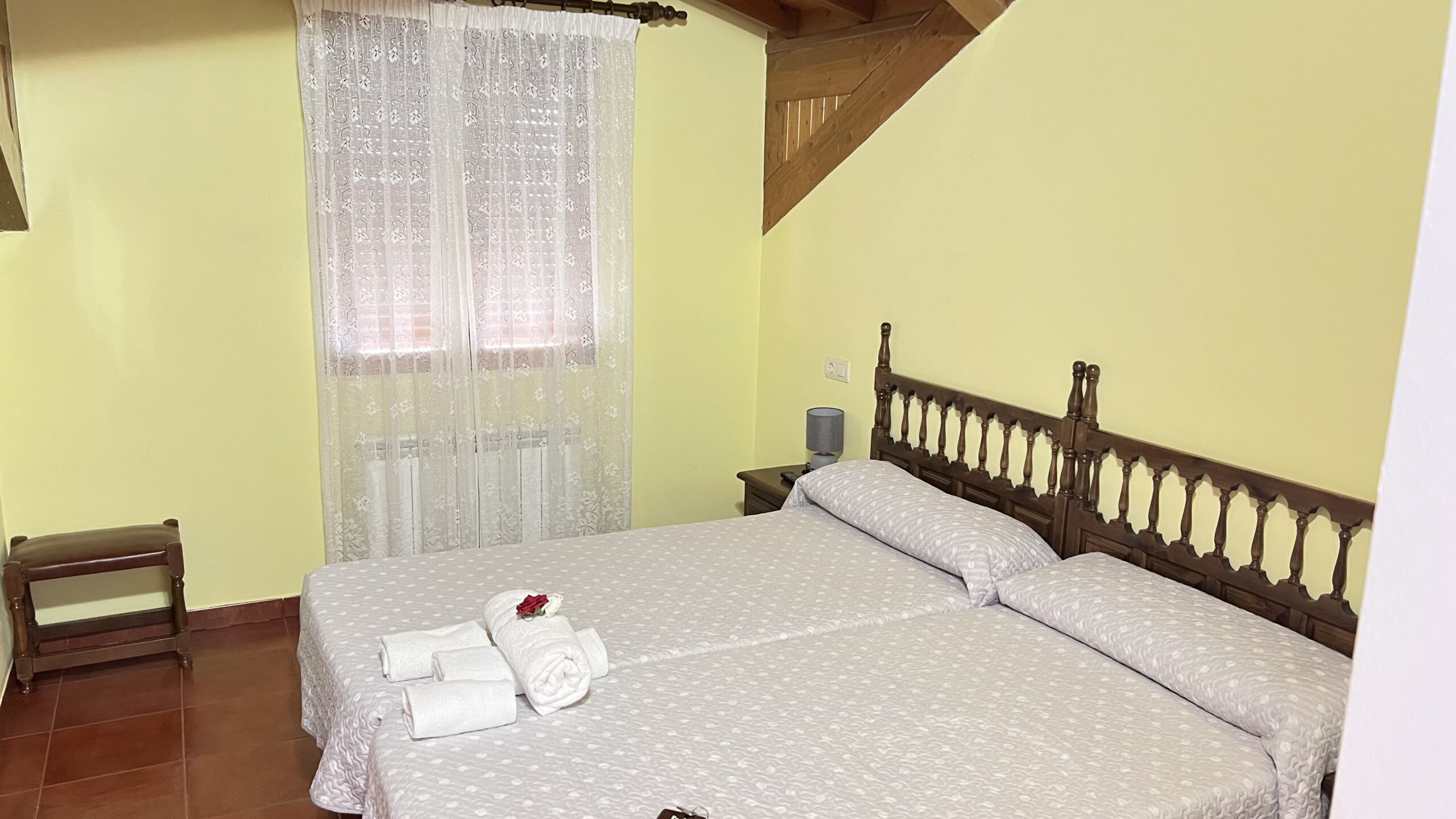
We stayed at the Hotel Yerri, which was on the far side of town, but was fairly modern and fresh.

A fairly decent view from my room if you kept looking left – to the right a block of apartments was being constructed. The weather forecast for today was fairly grim, confirmed by a brief thunderstorm while we were having breakfast. Just by the hotel is the Plaza de Toros de Estella – opened in 1917 and hosts the annual Bull Fair in August with a spectator capacity of 4500. We then passed the Estella Station (one side a bus station the other side a bar / restaurant onto a town square) as we headed out of town to pick up the Camino trail.

We crossed the River Ega, in full and muddy flow, and climbed up to the top of the town – looking back the clouds were gathering ominously in the distance.

Just a little outside town was the Bodegas Irache and the ‘famous’ Fuente del Vino. The original vineyards were donated to the Monastery of Irache in 1072 and the monastery doubled up as a hospital for pilgrims. The monks received the pilgrims who came to the hospital with a glass of wine – many arrived very sick and the wine was used as a restorative. The wine fountain honours this and has two pipes, one with water and the other with wine. The winery tasted just fine! Every day the fountain is filled with about 100 litres of young red wine, to quench the pilgrim’s thirst and make the path more bearable.

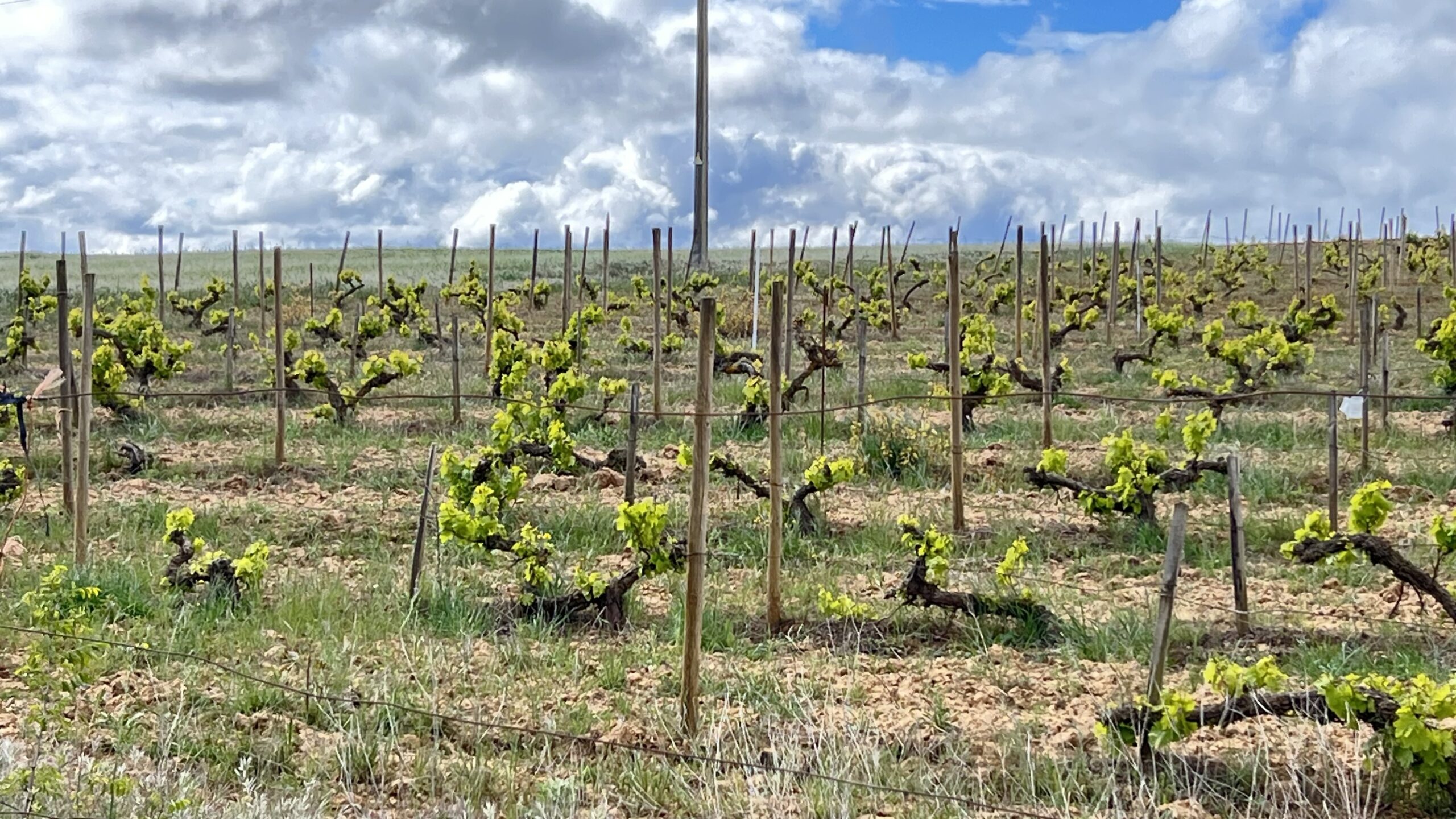
Green fields, gritty paths, distant views and moody skies were the features of the first half of the walk today, the rain held off but the wind was quite chilly. We started to see vineyards as we headed towards Rioja country tomorrow.

Today’s big climb followed – there is a castle and church at the top of the hill in the first photo – the bells could be heard clearly through the clouds. Just before the village of Villamayor de Monjardin is a historic medieval fountain from the XII century called The Fountain of the Moors and sculpture of a pilgrim sitting patiently while everyone poses for a selfie. As we exited the village the clouds were rolling in behind us and the wind was picking up.

We could hear the thunder getting closer and then the rain started. Not too heavy at first but grew into a steady downpour. It coming from behind us so one small mercy was that it wasn’t blowing into our faces. We had about 8km of walk remaining at this stage before we would get to our end destination for the day.

Screenshot
Screenshot
Screenshot

Puente La Reine to Estella

We stayed at the Hotel Jakue which comprises an Albergue, a “Glamping” area and an actual hotel.

Back to being in the countryside the view from my room was nice and far ranging. The hotel was about 1km outside the town so that needed to be completed before we could walk through the narrow street and across the Romanesque Bridge (over the Agra River). The Queen’s Bridge, which gives the town its name, was built by order of a Queen, but it is not known which one! In 1931 the bridge was declared a historical monument.

We walked past the Convent of the Commanderies of The Holy Spirit, built in 1754 to replace a 13th-century Convent, where apparently the nuns make sweets and cakes for sale. Some wandering along paths with crops (Barley this time) on one side and hedgerows on the other. Nightingales were making a racket, the range of their songs makes it sound like multiple different birds. Then we hit a steep hill (up 124m in 1.2km) which certainly got the heart pumping at this early stage of the day. It was good to look back and see all the wind turbines on the Alto del Perdon from yesterday’s walk.

We continued on the path, through a couple of small towns, past small groves of olive trees and small groves of almond trees. Some fields had both barley and wheat planted -this is typically to boost yield stability, enhance resistance to drought or pests, and optimize soil/water/light use through complementary growth patterns—barley emerges faster while wheat grows taller later. This also improves bread quality by blending barley’s resilience with wheat’s gluten. We then walked through Cirauqui, a town with lots of steep roads leading to the church at the top – this was the highest point of the day.

Carrying on we enjoyed the views as we crossed a few medieval bridges, looked back at where we had come from and passed by our first winery – Bodegas Tandem. Poppies were blooming everywhere, bringing the hedgerows into colourful life.

We walked through the villages of Lorca and Villatuerta before coming to the outskirts of Estrella and passing a drinking water fountain called Fuente de Los Peregrinos and then alongside the river Ega for a while (the water was very muddy no doubt due to the recent rainstorms). Luckily for us today we escaped any bad weather before we finally reached our hotel and checked in.

Screenshot
Screenshot
Screenshot

Pamplona to Puente la Reina

We stayed at the Hotel Maisonnave which, being a typical city / business hotel, was quite different from where we have stayed so far.

Being a city hotel, the view from my room was pretty much what one would expect. It was quite a pleasant walk out of Pamplona. Although still urban there were plenty of green spaces and then the views opened up as we walked past our first field of oats.

Many more fields of peas, rapeseed and oats filled the vast open spaces and alternated with narrow wooded paths. The bird song was incessant (in a nice way) and we identified Greenfinches, Blackcaps, Cetti’s Warblers, Nightingales, Cari Buntings, Melodious Warblers (great name), Corn Buntings and Blackbirds, I’m sure there were more but the Merlin app struggled to pick up the sounds over us crunching on the gravel path. The little chap above is (I think) a Corn Bunting who just sat there and shouted at us we we went past.

Now we started walking up to the top of the Alto Del Perdon (c750m). More views of distant villages and a couple of shrews (not sure they should have been handled by that person) before we reached the summit and a photo opportunity with the steel sculpture and a great view as the clouds had just lifted. Some of the paths had been quite slippery due the overnight rain – thankfully we had no rain during the walk to make them worse. It is said that all those who summit the hill will have their sins forgiven.

A couple of villages to pass through, a cold drink stop and then a long walk down a path between rapeseed and wheat and a multitude of wild flowers. Poppies, Thistles, Mallow, Fennel, Hawthorn, Dogwood, Hawksbeard, Daisies, Clary, Honeysuckle were all flowering and among the ones I could identify. We then tried to blend into the rapeseed field given the colour of our shirts – if you look hard you can just about see us!

There were plenty of almond trees, all bearing fruit, as we neared our Hotel, which is about 1km outside of Puente La Reina. It was not long until we reached our hotel, checked in, showered and joined the long queue for the washing machines & driers. Overall it was a very pleasant walk today and the sun made an appearance so all was well.

Screenshot
Screenshot
Screenshot

Akerreta to Pamplona

We stayed at the Hotel Akerreta, originally a farmhouse called Sastrearena, which is a typical Basque caserio (farmhouse) from the Pyrenees region. It features preserved elements like a Pyrenees-style kitchen, bread oven, and massive oak beams, earning recognition by the Príncipe de Viana Institute for its historical and architectural value.

I had the same bedroom as 3 years ago, which was functional and comfortable, and we all enjoyed relaxing in the sitting room and eating home cooked dinner in the dining room. The view from my window was of the local farmlands – all in all a lovely place to stay.

We started off down a reasonably steep rough stone path but this evened out into a nice woodland path alongside the River Agra which, in the shallower stretches, was fast running due to the recent rains.

We then passed a water trough known as the “Source Irotyz” which has always been used to water the local farmers herds. Apparently women were not allowed to do the laundry here, as it would contaminate the water for the herds, so they went either to the nearby stream Leiungo Erreka or the river Ituragaitz (which was preferred in winter due to the warmer water).

We then met a nun, who was sitting in her car, who told us we should go up a sharp hill to see the local church. She said this was the original way of the Camino anyway and not the modern manufactured route (in that local area). This is the Church of Saint Stephen, which dates back to the 13th century. We climbed the (very narrow) 55 steps to the top of the bell tower and rang the bell a couple of times – very loud but sonorous – the bell is reputed to be the oldest in the entire Navarra region.

We then took a section of path called the Camino S. Esteban for about 30 minutes until we rejoined the main track. Soon after we were in an urban area passing through a couple of towns until we entered, through the drawbridge, into the city of Pamplona.

We enjoyed a coffee and bocadillo / tortilla in the main square before heading to check in at our hotel. Then we spent the afternoon wandering around Pamplona, taking in the Plaza de Toros (bullring) and the Cuidadela de Pamplona (a renaissance fortress from the sixteenth century) as well as the various streets and larger buildings.

Tomorrow is back to climbing up and down hills as we head to Puente La Reine.

Screenshot
Screenshot
Screenshot

Roncesvalles to Akerreta

After spending most of yesterday walking uphill, we were going to be spending today going in the opposite direction.

We stayed at Casa Sabina, a small place but very busy with plenty of Auberge residents eating there as well as us in the hotel. Room was just fine and the view from my room (in the evening and in the morning) was worth looking at. Breakfast was a basic minimum!

Roncesvalles is (apparently!) famous in history and legend for the death of Roland (a military leader) in 778, during the Battle of Roncevaux Pass, when Charlemagne’s rearguard was destroyed by Basque tribes.

The 790 km to Santiago was just about sticker free when we last did this walk. We started out on a nice walk through the woods – all the walkers from Roncesvalles had long since left – with a loud cacophony of bird song to accompany us.

Still cloudy, but not enough to spoil the views, as we walked towards Burguete-Auritz. The old rough path had been ripped up with a tarmac end surface replacing it for quite some distance. We couldn’t find out what the tunnels were for, but we had passed what looked like a civil (or world) war bunker so presume these are part of some old complex.

We continued walking, passing through the small town of Espinal where we took a brief stop to look inside the Parroquia de San Bartolome – a modern church inaugurated in 1961. From there onwards, we were back in the woods, heading steadily downhill and with occasional spectacular views through the trees.

We continued downwards, sometimes very steeply and with a few sneaky sharp hills thrown in for good measure, until we reached the town of Zubiri. This is where most of the walkers stop for the day – we had another 6km to go. But first it was ice cream time. The bridge is the pretty XII century medieval bridge over the River Arga is called the ‘Puente de la Rabia’ (Rabies Bridge). According to legend, animals passing under the bridge were miraculously cured of any illness (including rabies!). Eventually we arrived at our hotel in Akerreta – exhausted after two very arduous days. Tomorrow we have a short day heading to Pamplona.

Screenshot
Screenshot
Screenshot

St Jean Pied de Port – Roncesvalles

Today was the start of our Camino to celebrate Mike’s retirement.

We stayed for our first night in the Hotel Central. My room was functional with a very comfortable bed and a stunning view from the window (first picture). I was on the main road side of the hotel so my earplugs came in very handy. We wandered around the town a bit after dinner before resting up for a big day in the Pyrenees.

The original town at nearby Saint Jean le Vieux was razed to the ground in 1177 by the troops of Richard the Lionheart after a siege and to this day the town’s layout is essentially one main street with sandstone walls encircling it.

It was fairly foggy/misty on the way up so views were limited, but it did provide a certain “atmosphere” to the walk. The cloud also preserved the heat so, even though the sun was well hidden, it was very humid and sweaty. We saw some cute donkeys and quite a few horses with foals as we walked to about 8km when we passed the Refuge Orrison, which is the last cafe/bar for the rest of the route.

The walk up to the refuge was the steepest, sustained climb of the day – 50% of the total ascent in 33% of the distance. It got a bit easier from there on, with a few sneaky exceptions thrown in. The clouds parted and we saw some sunshine and views as we crossed from France into Spain.

Here we are looking fresh and rested at the high point of our day, 1416m. This is the top of the Napoleon Route, named after Napoleon Bonaparte, as it follows the path his armies took when crossing the Pyrenees in 1813. The route is normally closed to walkers from October thru March.

The final stage of our day was a steep (500m in 3km) descent down a woodland path that was littered with stones and tree routes, meaning a careful (rather than headlong) descent down to Roncesvalles. The predicted rain held off until we had a needed (soft) drink on arriving at our destination and then bucketed it down once we were checked into our hotel.

A very enjoyable, if tough, day and great to back on the Camino. Game for today was to guess how many nationalities we would meet / talk to. At breakfast the offerings were 9, 10 & 11 – the end of day total was 23 – Switzerland, Italy, Romania, Ukraine, UK, France, Spain, Sweden, Finland, Germany, New Zealand, Australia, South Korea, Taiwan, Japan, Netherlands, Canada, Mexico, USA, Brazil, Argentina, Cuba, Hungary and Ireland.

Tomorrow is a lot of knee buckling descent and a fairly long day.

Screenshot
Screenshot
Screenshot