
We stayed in the very nice Hotel Roma, a 3-star hotel at the very top of town and right next to the train station. It’s not a busy train line so it wasn’t as bad as it sounds. Helena has joined us for the final 5 days walk into Santiago de Compostela.
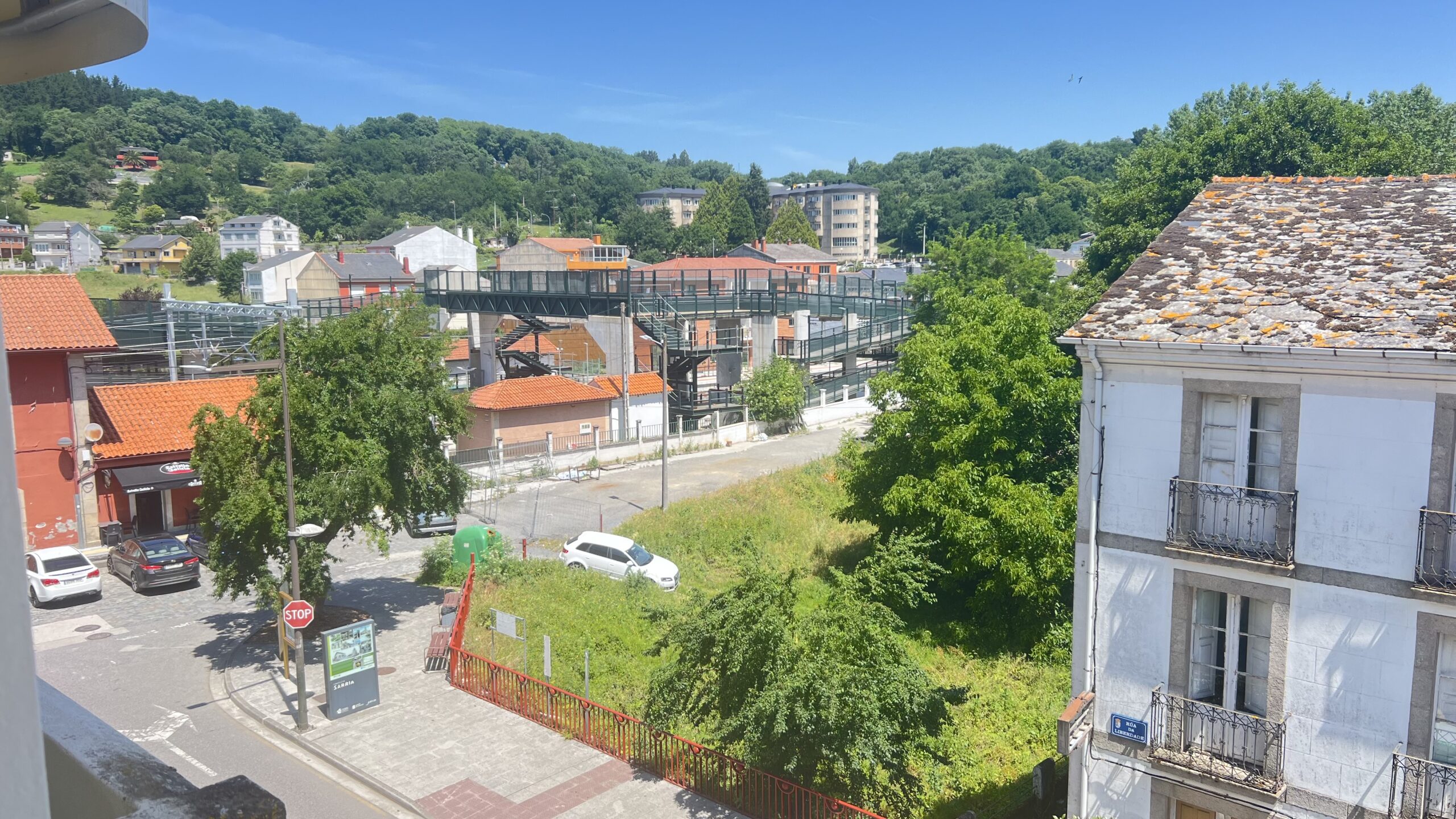


My room overlooked the Main Street and the train station, was nicely air conditioned and very comfortable. At breakfast (quite poor for such a nice hotel) there was a group of about 20 teenagers on their annual school trip, from California, to walk the last stages of the Camino. It was cool and very overcast as we started out, quite a change from the 30C+ temperatures of the previous evening. We started through the back streets of town and walked alongside the railway line for a few moments as we headed to rejoin the Camino trail.


Once back on the trail we walked through a wooded area, crossed the railway line and started up on the first climb of the day. Because this is the last 110km of the Camino Frances, and a minimum of 100 km is needed for the Compostela (completion certificate), we expected (and saw) a lot more pilgrims on the route. The low cloud and cool temperatures persisted for most of the day which made for ideal walking conditions, even if it did limit the scenery views for Helena.


We continued climbing, not sharply but interspersed with downhills, on a mixture of road and forest tracks. I think in the first hour, or so, we passed more walkers than we normally would in a full days walking.


We continued in the mist, alongside stone walls and an Iglesia de Santa Maria (quite a few with that name) before getting to the iconic 100km marker. Time for a stamp in our credential and a group photo before carrying on.


We were now at the highest point of today so started the slower descent (for now) down towards Portomárin. We passed quite a few cherry trees full of ripe cherries and plenty of pilgrims were stopping to try and grab a free snack. We walked through a small village, Marcadoiro, and continued on our way. At this stage the mist was slowly lifting allowing a bit more of a view.


At this stage we got our first glimpse of Portomárin, in the distance and below us, sitting on the edge of the River Minho. In the 1960s the river was dammed to create the Belesar reservior, putting the old village of Portomarín under water. The most historic buildings of the town were moved brick by brick and reconstructed in the new town, including its castle-style main church. After a sharp, but short, descent over what felt like irregular stairs, we reached the edge of the river and crossed the bridge to the town. Unfortunately, on the bridge a passing lorry swept Mike’s jaunty hat from his head and sent if to a watery grave in the river below. A quick jaunt up 46 steps and we were able to sit down for a spot of lunch. At this stage, with perfect timing, the clouds cleared and the sun shone down on us.


